
A practical guide through the complete Clinical Research Project lifecycle and key Management Skills in small bytes.
These posts walk you through each stage primarily from a CRO perspective with Pharma insights where processes differ. You'll find real experiences from 25 years in the field, templates you can adapt, brain-based strategies to reduce chances of burnout, and AI prompts that actually can help you.
Where project management methodology meets neuroscience and practical AI application.
Featured Articles

The Book I Wish I Had Had
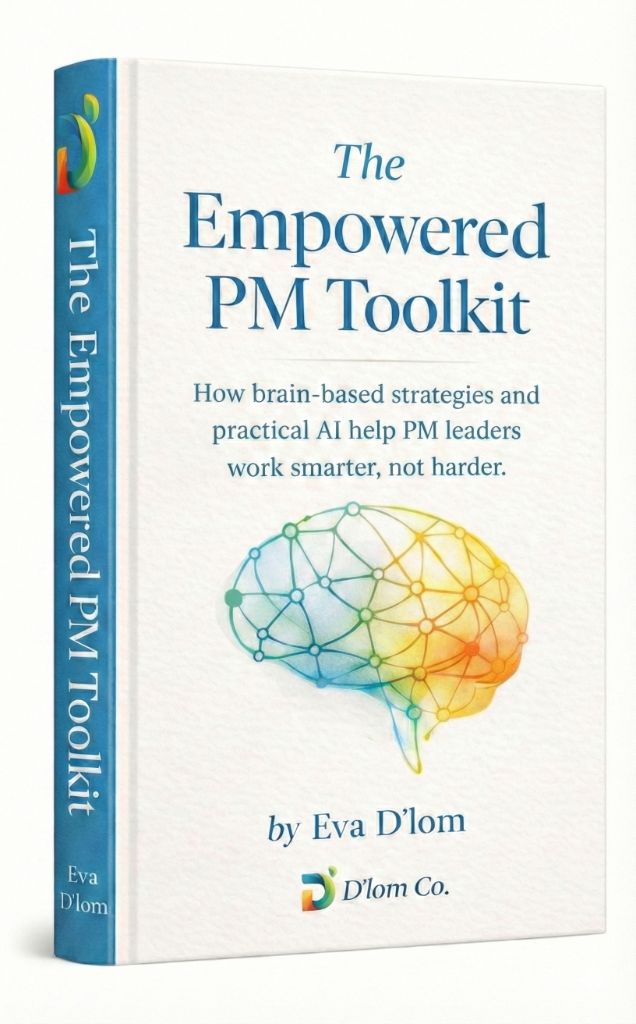
"Work smarter, not harder." You have heard it. Probably at the worst possible moment, when you were already at capacity, managing Sponsor expectations across time zones, trying to hold a global team together, and wondering how much longer you could sustain the pace. The advice landed like an accusation. As if you just hadn't thought of that.
I wrote The Empowered PM Toolkit because that phrase deserves a real answer. After 25 years in Clinical Research, two burnouts, a redundancy that shook me to my core, and a certification in Brain-Based Coaching from the NeuroLeadership Institute, I finally understood what was missing. The how. This book contains 18 strategies grounded in peer-reviewed neuroscience, with practical AI prompts you can use immediately, designed specifically for Project Managers and Project Directors who are tired of generic advice that ignores the reality of this industry. This is the book I needed, and never had, at my most difficult moments.
The "Work Smarter" Myth Cracked (18/18): Stress Response / HPA Axis
Every email notification triggers tension in your shoulders. Every Sponsor request activates anxiety in your chest. Every site delay feels like impending disaster.
Your sleep deteriorates. Your decision-making quality drops. Small frustrations trigger disproportionate reactions.
During a routine Sponsor call, they ask a straightforward question and your mind goes completely blank. You know this information intimately, reviewed it that morning, yet can't access it under pressure.
This isn't a failure of competence or preparation—it's your Hypothalamic-Pituitary-Adrenal (HPA) axis stuck in chronic activation, treating every challenge as a survival threat.
When you perceive threat, cortisol floods your system. Blood flow shifts away from strategic thinking toward threat response. Chronic stress creates measurable changes in brain structure and function.
But evidence-based neuroscience interventions can break this cycle. Discover how to train your nervous system.
The "Work Smarter" Myth Cracked (17/18): Flow State
You're fully immersed in complex strategic work. Time seems to disappear. A task that should feel difficult flows effortlessly despite its complexity. Two hours pass in what feels like 20 minutes, and you've produced work that would normally take you an entire day.
This isn't magic or a lucky accident—it's flow state, the optimal performance state where your brain operates in a unique neurological configuration that enables extraordinary performance with surprisingly little perceived effort.
In flow, you produce approximately 5 times your normal output at higher quality. But flow is extraordinarily fragile. A single interruption can destroy it completely, requiring 20-30 minutes to re-enter even under ideal conditions.
Discover how to engineer the specific conditions that allow flow to emerge reliably.
The "Work Smarter" Myth Cracked (16/18): Default Mode Network (DMN)
Three days of intensive analysis. Four different mitigation proposals. None felt right.
You're exhausted, frustrated, and increasingly convinced you're missing something obvious but can't identify what. So you force yourself to stop working—not because you've solved the problem, but because staring at the same information is producing diminishing returns.
Twenty-five minutes into a walk, completely unbidden, the solution emerges. Not from active problem-solving, but from what feels like nowhere.
This isn't magic. Your Default Mode Network was processing experiences, making unexpected connections, and solving problems unconsciously.
The toughest problems often solve themselves during walks or sleep because your DMN integrates information differently than your conscious, focused thinking does. Discover how to activate this hidden cognitive system.
The "Work Smarter" Myth Cracked (15/18): Spacing Effect
You've blocked your Saturday for an 8h protocol review marathon. By evening, you feel confident you've mastered everything.
Two weeks later at the kick-off meeting, the Sponsor asks about safety timelines and your mind goes blank. The information you "learnt" has vanished.
This isn't a failure of concentration or note-taking—it's basic neuroscience. Your brain cannot consolidate substantial learning from a single massed exposure, no matter how long or intense.
Distributed learning spread over time produces dramatically superior retention compared to cramming. Discover why spacing works and how to structure your learning for permanent expertise rather than temporary familiarity.
The "Work Smarter" Myth Cracked (14/18): Chunking
Your working memory holds just four to seven items simultaneously—a hard neurological limit, not a personal failing.
When you're managing sites, Sponsors, timelines, and budgets, you're constantly exceeding this capacity, causing the mental overload that makes everything feel harder than it should.
Chunking transforms multiple competing items into single organised units your brain processes effortlessly. This isn't about remembering more; it's about organising information to match how your working memory actually functions.
Discover how standardised templates and information chunks can exponentially expand your effective cognitive capacity without changing your neurobiology.
The "Work Smarter" Myth Cracked (13/18): Priming Effects
You're sabotaging your entire day before 8 a.m. Not through poor planning or weak willpower, but through neural priming you don't even recognize.
When you check email first thing each morning, you're programming your brain to spend the entire day in crisis mode. Not metaphorically. Neurologically. Your Reticular Activating System gets primed to filter for problems. Your stress response activates before you've encountered any genuine crisis. Your prefrontal cortex shifts into reactive rather than strategic mode.
The Buddha understood this 2,500 years ago: "The mind is everything. What you think, you become." Neuroscience now explains the mechanism. What your brain encounters first shapes how it processes everything that follows. This is priming, and it's not mystical mindset work; it's measurable brain function.
The solution isn't working harder. It's deliberately controlling your first five minutes to programme strategic thinking rather than accidentally triggering defensive firefighting. Here's the protocol that transforms your entire day through working with your brain's priming mechanism.
The "Work Smarter" Myth Cracked (12/18): Memory Consolidation
You attended a four-hour protocol training session. You took detailed notes. You felt confident you understood everything. Three weeks later, preparing for a Sponsor call, you can barely remember half the material.
This isn't a memory problem. It's a consolidation problem.
Learning doesn't happen during the training itself. It happens during rest—when your hippocampus replays experiences at high speed, transferring information from temporary storage into permanent memory. Without proper consolidation intervals, even the most intensive training becomes temporary familiarity that evaporates under pressure.
The solution isn't studying harder or taking better notes. It's understanding that your brain needs specific rest intervals to make learning permanent. Here's the protocol that transforms fragile short-term learning into expertise you can access instantly when it matters most.
The "Work Smarter" Myth Cracked (11/18): Prospect Theory & Loss Aversion
You've prepared a compelling proposal for your Sponsor. The solution is sound, the data supports it, the benefits are clear. Yet somehow, your recommendation gets a lukewarm "We'll think about it" and disappears into the approval void.
The problem isn't your solution. It's how you framed it.
Your Sponsor's brain—like yours—fears losses approximately 2.5 times more intensely than it values equivalent gains. This isn't irrational; it's evolutionary neurobiology discovered by Nobel laureate Daniel Kahneman. When you frame proposals in terms of opportunities gained rather than losses prevented, you're speaking to the wrong part of their decision-making circuitry.
This post shares the protocol for working with loss aversion rather than against it—transforming how you communicate with Sponsors, make decisions, and prevent your own threat-detection mode from blocking innovation.