
A practical guide through the complete Clinical Research Project lifecycle and key Management Skills in small bytes.
These posts walk you through each stage primarily from a CRO perspective with Pharma insights where processes differ. You'll find real experiences from 25 years in the field, templates you can adapt, brain-based strategies to reduce chances of burnout, and AI prompts that actually can help you.
Where project management methodology meets neuroscience and practical AI application.
Featured Articles

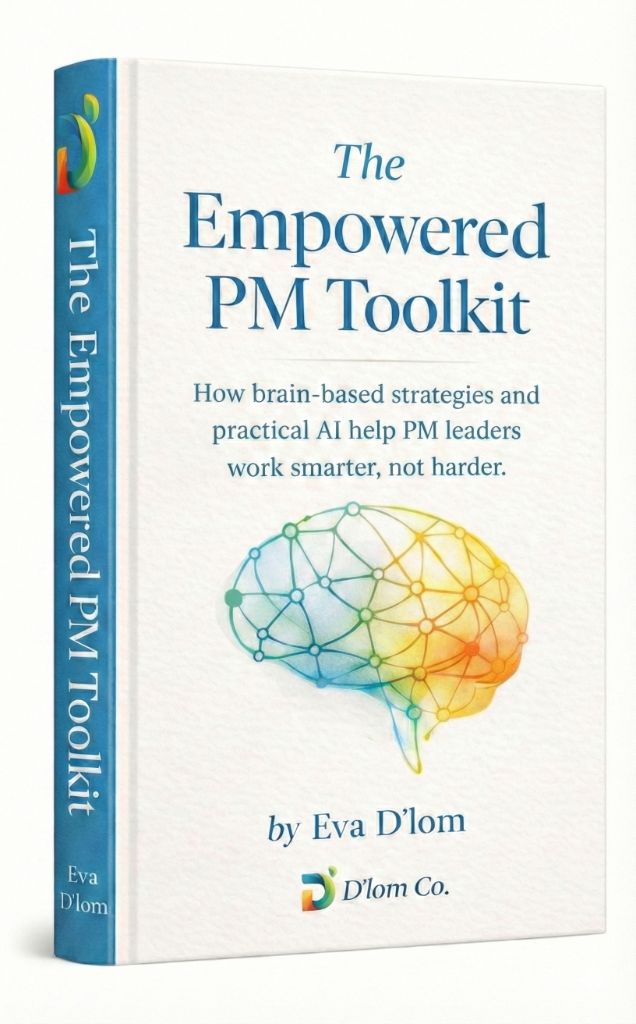
The Book I Wish I Had Had
"Work smarter, not harder." You have heard it. Probably at the worst possible moment, when you were already at capacity, managing Sponsor expectations across time zones, trying to hold a global team together, and wondering how much longer you could sustain the pace. The advice landed like an accusation. As if you just hadn't thought of that.
I wrote The Empowered PM Toolkit because that phrase deserves a real answer. After 25 years in Clinical Research, two burnouts, a redundancy that shook me to my core, and a certification in Brain-Based Coaching from the NeuroLeadership Institute, I finally understood what was missing. The how. This book contains 18 strategies grounded in peer-reviewed neuroscience, with practical AI prompts you can use immediately, designed specifically for Project Managers and Project Directors who are tired of generic advice that ignores the reality of this industry. This is the book I needed, and never had, at my most difficult moments.
The "Work Smarter" Myth Cracked (13/18): Priming Effects
You're sabotaging your entire day before 8 a.m. Not through poor planning or weak willpower, but through neural priming you don't even recognize.
When you check email first thing each morning, you're programming your brain to spend the entire day in crisis mode. Not metaphorically. Neurologically. Your Reticular Activating System gets primed to filter for problems. Your stress response activates before you've encountered any genuine crisis. Your prefrontal cortex shifts into reactive rather than strategic mode.
The Buddha understood this 2,500 years ago: "The mind is everything. What you think, you become." Neuroscience now explains the mechanism. What your brain encounters first shapes how it processes everything that follows. This is priming, and it's not mystical mindset work; it's measurable brain function.
The solution isn't working harder. It's deliberately controlling your first five minutes to programme strategic thinking rather than accidentally triggering defensive firefighting. Here's the protocol that transforms your entire day through working with your brain's priming mechanism.
The "Work Smarter" Myth Cracked (12/18): Memory Consolidation
You attended a four-hour protocol training session. You took detailed notes. You felt confident you understood everything. Three weeks later, preparing for a Sponsor call, you can barely remember half the material.
This isn't a memory problem. It's a consolidation problem.
Learning doesn't happen during the training itself. It happens during rest—when your hippocampus replays experiences at high speed, transferring information from temporary storage into permanent memory. Without proper consolidation intervals, even the most intensive training becomes temporary familiarity that evaporates under pressure.
The solution isn't studying harder or taking better notes. It's understanding that your brain needs specific rest intervals to make learning permanent. Here's the protocol that transforms fragile short-term learning into expertise you can access instantly when it matters most.
The "Work Smarter" Myth Cracked (10/18): Motivation
You've been relying on external pressure for motivation: Sponsor deadlines, fear of failure, last-minute panic. It works short-term but creates a exhausting rollercoaster: high energy when pressure is intense, complete depletion when it's not.
This isn't a personality flaw. Motivation isn't a trait you either have or lack. It's a neurological state influenced by predictable brain chemistry, particularly dopamine, the neurotransmitter that drives goal-directed behaviour.
Clinical Research PMs face unique motivational challenges: years between meaningful milestones, invisible successes (preventing problems that never happen), constant external pressure, and high cognitive load that depletes motivational resources.
Here's the systematic protocol that transforms motivation from something you hope to feel into something you can deliberately engineer—using the same neuroscience principles that sustained Michael through fifteen years of burnout to strategic PM success.
The "Work Smarter" Myth Cracked (9/18): Dopamine & Progress Principle
Michael was 8 months into an 18-month study. Database Lock was 10 months away. First Patient Enrolled had been 7 months ago. Everything between felt like endless grind with no wins.
He was exhausted, unmotivated, questioning his career choice.
Michael's brain hadn't received a significant progress signal in 7 months. Neurologically, he was in a motivation desert.
This isn't about discipline or work ethic. It's about dopamine: your brain's motivation molecule. Research shows that small, frequent wins trigger more sustained motivation than occasional big wins. Your brain craves the dopamine hit of progress, not completion.
The overwhelmed PM problem: Big deliverables might be months away. No progress signal equals no dopamine equals motivation collapse equals burnout.
Here's the neuroscience-backed protocol to engineer dopamine-worthy milestones that sustain motivation through even the longest clinical research marathons.
The "Work Smarter" Myth Cracked (8/18): Pattern Recognition & Expertise
Ever watched a senior PM glance at a recruitment graph and immediately spot problems you completely missed?
They’re not psychic, and they’re not working harder than you. They’ve built a pattern library in their hippocampus through 10,000 hours of experience.
Here’s what nobody tells you: you don’t need a decade to build that library. With deliberate pattern recognition training and AI amplification, you can compress 15 years of expertise development into 18 months.
This isn’t about working harder; it’s about systematically training your brain to see what experts see, using neuroscience principles that accelerate pattern storage and AI tools that expose you to thousands of data points instantly. T
ransform from reactive problem-solving to predictive expert recognition.
The "Work Smarter" Myth Cracked (6/18): Attention Residue
You switch tasks 50 times per day—checking email between writing reports, answering quick questions during strategic planning, reviewing documents while on calls. You're busy every minute, yet at day's end you've completed nothing meaningful. This isn't because you're inefficient. It's attention residue: every task switch costs 20-40% of your cognitive capacity for the next 20 minutes. Your brain literally cannot switch instantly. The residue lingers, fragmenting your focus across dozens of incomplete tasks. The exhaustion is real, but invisible. This post reveals the neuroscience behind why you feel mentally destroyed despite being "productive" all day, and provides a six-step protocol to reclaim your cognitive capacity for the strategic work that actually matters.